
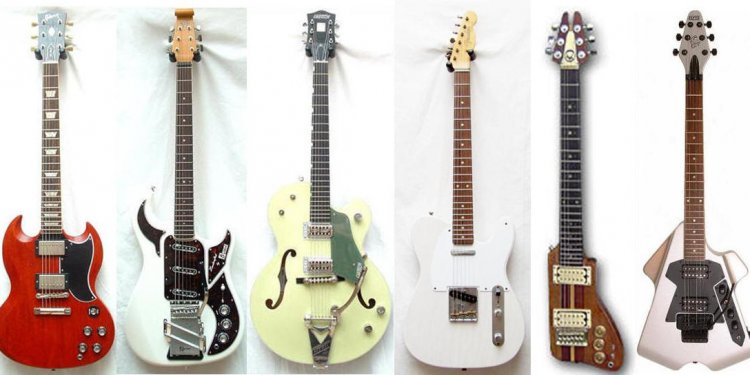
Best electric guitar ever made
 i have to admit i am perhaps not awfully impressed by the quality of these days's software—my benchmark permanently product design is not defined by the output of Microsoft, Apple, Adobe, or other respected computer software companies. Those companies create the right work, naturally, however the software business, though no longer in its infancy, nevertheless appears to be working through its gawky teenage phase. Therefore, when I think of high-quality services and products, I think of BMW vehicles, Eames furniture, and also the Fender Stratocaster guitar.
The Fender Stratocaster is not any significantly less than perhaps one of the most well-known, familiar, important, and best-selling electric guitars available. The Stratocaster was introduced in 1954 and contains thrived fundamentally unchanged throughout 47 years of production, getting the popular tool of countless guitarists including Eric Clapton, Jimi Hendrix, Mark Knopfler, David Gilmour, and Stevie Ray Vaughan. The Stratocaster—along with another revolutionary guitar, the Gibson Les Paul—stands head and shoulders above every other solid human anatomy electric guitar made. Ever Before. Its a model of good item design.
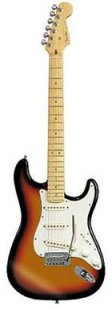
These days's Fender Strat (above) seems, works, and sounds exactly like the original design introduced in 1954 (below).
In 1953, Leo Fender—the president and visionary of this Fender Electric Instrument Company—began focusing on the next phase in the advancement of solid human body electric guitar. Leo caused Fender employees Freddie Tavares and George Fullerton, and artists Bill Carson, Rex Gallion, and others to comprehend needs and check assumptions during the design procedure. Leo's goals had been to construct the greatest solid human body guitar previously and to enhance the Fender brand to increase sales.
One key into the Stratocaster's success was that the design took under consideration the requirements and desires of expert guitarists. Not being a musician himself, Leo relied upon input from musicians to guide the style associated with tool. As a result, it fulfilled the artists' objectives of playability, convenience, and great sound, while becoming easy to restore and/or personalize. Advantages and attributes of the 1954 Fender Stratocaster included:
- An ergonomic design with forearm and tummy bevels and better overall balance that made a guitar more content to relax and play
- A "drop-in" pickguard and pickup set up that made the Stratocaster substantially much easier to mass-produce, repair, and tailor
- A bolt-on throat that has been more affordable to produce (the necks of single-piece guitars sometimes warped during manufacturing in addition to entire tool will have to be discarded) and simpler to service
- The ability to create brand new noises impossible along with other devices, that part inspired brand-new music styles like Surf and Hendrixian-style psychedelia
And these advantages, early Stratocasters looked contemporary and cool, and arrived in all kinds of funky colors that hardly any other organization ended up being making use of. All of those other solid body guitars associated with the day—including Fender's very own Telecaster model—had all-natural lumber or "sunburst" finishes (one notable exclusion becoming the Les Paul "goldtop"). By comparison, Fender, using a cue from car industry, utilized automotive paints in vibrant solid colors like Daphne Blue, Surf Green, and Fiesta Red.
In several ways, the Stratocaster has also been an early on exemplory instance of a platform, spawning an entire business of replacement and custom parts producers. Today, there's no solitary component of the Stratocaster that you can't find a custom replacement, from multiple vendors. For example, guitarists looking for an innovative new group of pickups to personalize their instrument can choose from broad products offered by manufacturers such as for instance DiMarzio, Seymour Duncan, Lindy Fralin, Joe Barden, EMG, plus Fender itself.
Share this article
Related Posts



Latest Posts


