

Songs to play on electric guitar
 during the early 1960s, burgeoning folk music scenes were burbling up all over the country, while the Newport Folk Festival was their particular confluence.
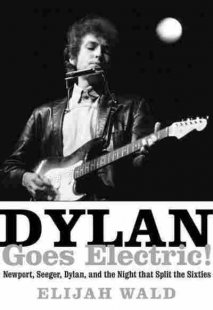
By the middle associated with decade, the reigning king was a new Bob Dylan, the person who provided them the now-standards "Blowin' inside Wind" and "The Times they're a-Changin'." But with this day 50 years back, Bob Dylan did the unthinkable, the unforgiveable: He plugged in a power electric guitar, and he rocked hard.
Songs historian Elijah Wald has actually written a unique guide about this overall performance labeled as Dylan Goes Electric!: Newport, Seeger, Dylan, and also the Night that Split the Sixties. Talking to NPR's Arun Rath, Wald says that when the viewers had known only a little more info on their particular hero's hearing practices as a youngster in Minnesota, their transformation at Newport '65 may possibly not have come as such a shock. Hear the air version within sound website link, and read more of these conversation below.
Arun Rath: let us talk about the young Bob Dylan, or rather the young Robert Zimmerman. What sort of songs had been he ingesting before he turned to folk?
Elijah Wald: he had been an R&B lover. Men and women frequently speak about him as a rock 'n' roll lover, but he had been so much more R&B. It is interesting: He was actually listening to accurate documentation system, their favorite system, that has been beamed off Shreveport, La., which was focusing on things such as B.B. King, Jimmy Reed, Bo Diddley, Chuck Berry. He had been the type of kid whom went, "Oh yeah, Elvis Presley, he is only imitating Clyde McPhatter." There is really a take of him saying that when he was in high-school. Minimal Richard, incidentally, was their hero. He pounded piano and shouted like Little Richard and did the falsetto whoops and all of that.
That's among fascinating things within book. I simply thought the Bob Dylan thing had all kind of started with Woody Guthrie.
Woody had been a giant figure in his world, but it was not a great deal about Woody's tracks. He liked Woody's songs, nonetheless it had been [more about] Woody's book, Bound for fame, and therefore entire concept of just the free spirit, rambling beginner guitarist. It was the enchanting attachment of the whole concept of escaping . and performing the true people's songs one of the genuine folks.
You write on Bob Dylan as he arrived in ny, additionally the scene in Greenwich Village. It really is almost like he is trying on different personas — as you can't say for sure which Bob Dylan might show up.
Really, those who knew Bob Dylan back in Hibbing, Minn. say he was already attempting on personas. But, you know, that is not very uncommon.
He was youthful!
Yeah, precisely. a guitarist and singer, 18, 19, twenty years old. It's very typical you will grab a record and sound like that record for two weeks, and after that you'll collect another record and seem like that for some time.
He had been entering Greenwich Village at a moment that was really exciting. There clearly was music all around us; there were all of these people to learn from. Everybody who understood him after that, you retain hearing: "He was like a sponge." "He was like a chameleon." He had been changing extremely quickly.
The people scene that you talk about from in those days is a lot much more diverse than I noticed. There are also factions, in a way.
There constantly had been rubbing within the folk scene amongst the individuals who truly thought that this music ought to be done authentically, ought to be done appropriate, and people who simply thought, "You know, this is certainly fun music, why don't we take action nevertheless we wish. Let's get it done in manners which are fun." There were lots of people on purist side who thought the pop-folkies were using great songs and turning it into tripe. And there have been loads of people on the other hand just who believed the purists were becoming, you understand, a lot of ridiculous prigs.
There is a point you return to inside book numerous times: that as far as Dylan's inspiration, it wasn't like he wanted to lead the folk revolution. He didn't desire to lead a movement.
He wasn't an action style of guy. I'm maybe not planning state that he wanted to be a pop celebrity, but he had been not a joiner. He had been bad with organizations. Which is i do believe one of the items that ended up being taking place later on in 1965: there was clearly this feeling it was all about, "we are going to make a movement that will change the world." And he had been all for changing the world, but he had beenn't much for motions.
Share this article
Related Posts

Latest Posts


