

Chords on electric guitar
 Playing the same old chords on every song can get quite tiring and that can leave a music job stale in a heartbeat. If you play G – C – D on every track without attempting to also embellish it a little bit with interesting chordal work the audience will probably get uninterested in your electric guitar playing or production rapidly.
Using chord inversions is an easy option to enhance your chordal playing, by familiarizing yourself using various chord forms on fretboard it is possible to pull yourself from that electric guitar production gap you have dug your self into.
Theory of Chord Inversions
Basically a chord inversion is the identical chord but with the notes inverted. A typical C significant chord has got the records C, E and G - C becoming the root, E becoming the main 3rd and also the G becoming the perfect fifth. Then when we perform a normal open C chord strum, we hear the records C – E – G in quick succession creating that C significant chord.
Today, a chord inversion is actually equivalent chord however with the order of this notes inverted. Therefore if I would have fun with the records G, C and E it would nevertheless be the exact same C significant chord, but an inversion of it.
Since we have only three records inside specific chord, we could only have three different voicings, consequently just two separate inversions. The first voicing being the conventional C major chord, with C – E – G, the 2nd substituting the next note in bass, creating E, G and C and lastly the one we discussed earlier, the G, C and E. See how you simply shuffle initial note so that it ends up last in line? Which is a simple way to visualize inversions when you yourself have the notes in front of you.
But why don't we apply this towards the electric guitar for many fun chordal harmonies.
I'm going to be taking a very basic chord progression you have seen a million times prior to, namely C – F – Am – G, and increase chord inversions to it to create a jangly chord equilibrium above. This really is something you can make use of if you are stuck in a rut in your guitar playing.
 Harmonizing isn't just for Metallica solos, it can also be accustomed develop interesting chord parts.
This is just what we are going to be playing more than.
Overlook the drum beat that we directly copied from Ultrabeat, plus don't assess me-too a great deal in the electric guitar sound. This will be a concept based tutorial, and not much centered on the guitar appears themselves, which are all presets in Logic professional 9.
1: Play Some Chord Melodies
As you possibly can hear from chord development, it really is about since dull as it could get. One way to include interest should add some plucked chords underneath. This first example is myself playing truly easy chord patterns basically following crunchy chords from example before.
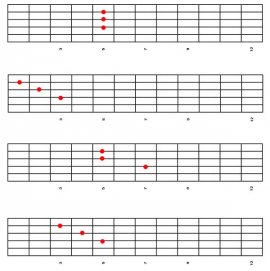
I am plucking the chords the thing is that right here under:
Except the initial one, these chordal plucks aren't inversions of these chords. They truly are only plucked chords going from first note to third to fifth. 1st chord is a second inversion of C major, but since I have had been only after the hand muted chords through the first instance we played the inversion rather. We will reach another inversion in only a minute.
2: Double the Chords?
 today, that which we could do is double track the plucked chords and pan them to produce depth when you look at the track. We would only play the same task once again after which pan each of them somewhat off center, leading to a chorused and doubled sound.
Although this can perhaps work if we so desired, it's however quite dull and boring. We'd rather desire extra melodic and harmonic level towards track which we would achieve by not merely doubling the chords played but by playing inversions of the identical chords.
3: Enjoy Some Inversions
Certainly one of David Bowie's guitarists (i can not bear in mind whom, they've been quite a few) as soon as said that the simplest way to play lead was to understand five different forms of a. By doing this, you can find a method to relax and play just a little lead if you are changing from a single shape to the next.
To be able to play inversions you need to know a few various shapes of most these chords on the fretboard. If you know the right path around a few different shapes of the identical chord it is simple to find and pluck interesting chordal inversions.
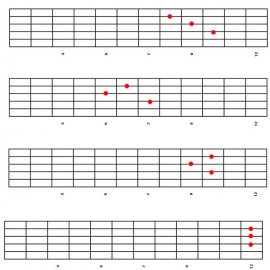
Within the next sound instance i have recorded a unique chordal lead line on the plucked chords. Since I have realize that C major also offers a banned shape on the 8th fret, I can play its typical voicing there, harmonizing the C significant inversion in the first instance. I'm sure that i will develop a first inversion of the F chord too by playing the third, 5th and root on 5th to seventh fret and I'm utilizing an initial inversion of this a small chord regarding tenth fret, ending in 2nd inversion in the G chord form all the way on the 12th fret.
Notice that by playing the inversion, not just do we create a good harmonic chord part, but by having the last two chord inversions rise through the tenth to your 12th fret we produce expectation. Something we're able to make use of when we were going from verse to chorus for example, to create energy and accumulation.
Step Four: Add Some Level
I believe it really is sounding quite cool chances are, but we are able to include only a little DAW strategy into the combine to produce a much thicker sound. By utilizing a similar trick towards the one I discussed inside Pan Your Reverb quick tip, we are able to use pan and delay to produce a much thicker chordal part.
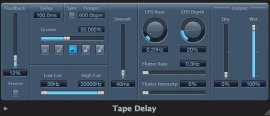
Send both initial lead part and the chord inversion to a different coach each. Today insert a delay on both busses and set it up to a doubled feel, with wait at about 100ms and incredibly little feedback. I'm making use of Logic's tape wait so I made a decision to increase modulation to your signal for kicks and.
Now through the use of pan controls we can pan the delay associated with chordal component closer the inversion and vice-versa. I am panning the initial signals hard kept and hard right after which panning the delayed signal about halfway regarding opposite part of the origin noise. See when you look at the screenshot below just how everything is panned throughout the stereo spectrum.
Now we've wound up with a wall surface of guitar sound, filled with thick chordal harmonies for the melodic result towards guitar playing. Make sure you decrease the quantity regarding the busses otherwise the wait might go off also powerful.
Conclusion
By once you understand your path around the fretboard it's not hard to develop various chord shapes and inversions to give you off a routine. Many guitar player play inversion only, leaving it into bass to supply the tune using the real chord development. Like that its more straightforward to concentrate on the melodic components of chord playing, rather than get trapped strumming the same kind of chords again and again.
Share this article
Related Posts

Latest Posts


