

Electric Guitar Equipment
 Liking the information thus far?
As soon as you’ve fixed the situation of assembling a fundamental working studio…
Another question becomes:
How will you put it to use to record devices?
Because often, what realy works in pro studios, does not work very well in residence studios…
Where insufficient gear frequently causes united states to create innovative shortcuts.
Which is the reason why, for today’s post…
I describe several useful residence recording options for the 5 common musical tools:
- Guitar
- Bass
- Acoustic Guitar
- Keyboards
- Drums
(view here to learn about vocals.)
Initially up…
Tracking Electric Guitar
The simplest method to capture guitar is:
However, used, pro studios often take it a great deal more by making use of:
- a combination of amps,
- with a combination of mics,
- found in numerous spots,
- combined collectively employing their own “secret meals”
But since couple of house studios possess gear for those higher level techniques…
Here’s whatever they do instead:
1. Recording with a primary Container
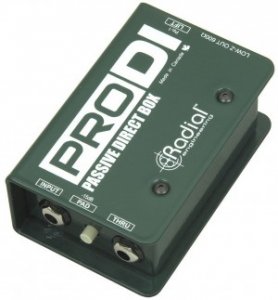
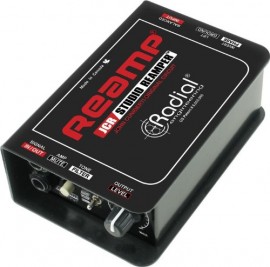
By plugging your guitar into a primary field (including the one pictured)…
You convert the hi-z electric guitar signal into a low-z mic signal…
 that may after that be taped directly into your DAW as a dry track without effects.
To create results, an amp simulator is placed from the track, which will be essentially a digital version of your guitar rig.
Compared to the “traditional” means of electric guitar recording, this method is:
- less expensive,
- quieter,
- calls for less area, and…
- offers even more noise choices
Since most sound interfaces today have DI inputs included, chances are you wont even need certainly to buy one.
If not, browse this article to determine what direct containers i will suggest:
For amp simulators, I recommend:
And for the ultimate all in one solution which includes DI inputs, digital amp tones, AND Pro Tools pc software, there’s this:
Now despite it is advantages, most people agree totally that perhaps the best amp simulators however don’t noise quite as good as the “real thing“.
Which Is The Reason Why some home studios still prefer the conventional method of…
2. Miking your guitar Cabinet
For top level shot at getting that “studio quality” sound…
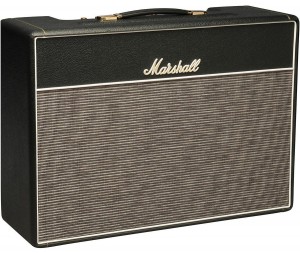
There’s no replacement placing an excellent mic to good amp.
So right here’s the basics how it’s done:
Very first there’s the mic…
People some prefer a mic specifically made for tracking electric guitar cabinets, for instance the Sennheiser e906 – (price/reviews).
 Nevertheless any good dynamic mic or ribbon mic will do fine
Here are the ones I recommend:
Next comes positioning…
Begin by putting the mic up against the cabinet, dealing with the cone. From there, experiment with small modifications in length and perspective before you find a spot with a good tone.
Another technique would be to reposition the amp itself by:
- tilting it to attenuate the period cancellation from showing walls
- putting it on a riser to eradicate acoustic coupling using floor
- changing its room area to tweak atmosphere
With a little bit of perseverance, and plenty of experimenting, you could get a remarkably good tone making use of only these easy techniques.
Up next, here’s one last approach to tracking guitar that is a mix of initial two…
3. Re-Amping
If You Would Like the noise of a real guitar amp…
However prefer the flexibility of amp simulators…
One Method To have both is by using something known as a reamp…
Which works by converting the line-level output from your own user interface into an electric guitar signal, which moves through an additional electric guitar cable, that is after that given back once again to your amp.
The first advantageous asset of this technique is, you can compare and blend the “real” and “simulated” variations, for the best feasible tone.
The 2nd benefit is, you are able to however modify the tone of amp, and re-record the track, long after your guitar player moved home.
To test it, here are 2 good options i would suggest:
 Up after that…
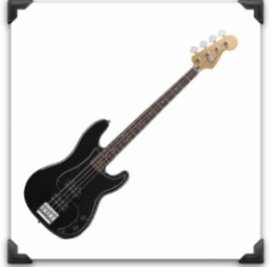
Tracking Bass Guitar
The great thing about bass electric guitar is…
In The Home, you can easily record it with the same fundamental practices as those utilized in guitar…
…with just a few little differences.
Initially there’s the mics:
Bass cabinets in many cases are recorded using unique bass mics, with answers tailored to low-frequency devices.
After that there’s the direct field:
Based your thing of bass, you’ll have actually either passive or active pickups.
The general rule of thumb the following is:
- Passive basses utilize active DI’s
- Active basses utilize passive DI’s
Once again, right here’s the web link to help you find what you need:
And lastly, there’s the amp simulator:
Many amp simulators do include couple of bass settings, here’s one created SPECIFICALLY for bass:
As soon as you’ve got these covered, you’re ready.
Up next…
Tracking Classical Guitar
Despite it's beautiful user friendliness…
Just what many people don’t grasp is…
Classical guitar is just one the absolute most sonically complex of all music instruments.
Because form actual notes…
The sound of this instrument also includes:
- the choose strumming the strings
- your hands squeaking the strings
- your hand muting the strings
- your palm tapping the soundboard
- the strings tapping the frets
Whilst it’s not necessarily necessary to capture classical guitar to this level of detail…it is important often.
In an instant I’ll demonstrate exactly how. But first, the easier methods…
1. Acoustic DI Tracking
Since area acoustics play a BIG role in electric guitar recording…
And A Lot Of residence studios have less-than-awesome acoustics…
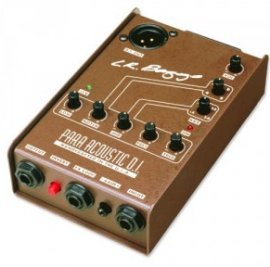
an easy method to side-step this dilemma will be capture with an acoustic DI instead of a microphone.
The key differences between an acoustic DI and standard direct box tend to be:
- the feedback impedance is much greater to suit the result of piezo-electric pickups
- the sound offers more high-end, to capture the high-frequency detail of this acoustic guitar
To try this technique, listed below are are some good acoustic DI’s I recommend:
2. Mono Tracking with a Mic
While acoustic DI recording could work for a property studio to-an-extent…it’s still no substitute for a acoustic guitar microphone.
Share this article
Related Posts
Latest Posts


