
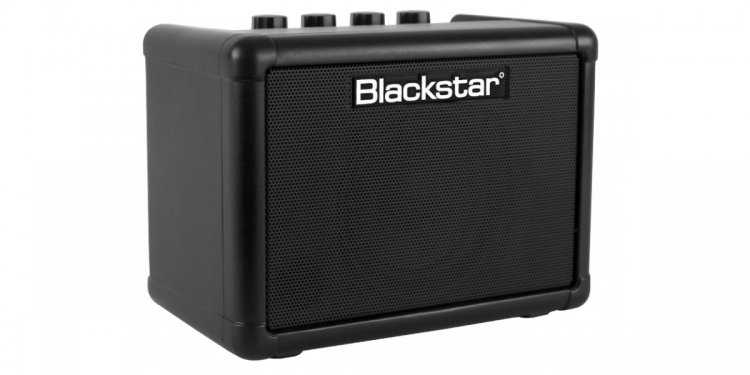
Small amp for Electric Guitar
 within the recording studio, you don’t constantly require countless energy from a guitar amp. If such a thing, often less is more in terms of degree, and lots of experienced designers will tell you that a number of the biggest guitar sounds will come off some of the littlest amps.
There are a lot of benefits to using little amps in studio: they may be able give you more and better-sounding gain at a lower-level, they’re much easier to swap inside and outside of a taut spot, they’re cheaper, in order to do have more tastes for a passing fancy budget, and they’ll frequently have an exclusively unforgettable personality and tone.
Remember that in a literal and philosophical good sense, tracking itself is an illusion. Appears – the oscillations of particles in the air – cannot undoubtedly be captured and bottled up – only impersonated in another kind. Your microphone does not know how huge your amp is, it simply knows how great the tone sounds. Plus VU meter doesn’t discover how loud your sign is in absolute terms. It simply understands what lengths you could make it go.
With that in mind, here are a few little, classic tube amps which can be best-suited for the recording studio. Switch ’em up.
EL-84 Kind
Trademark Models: The Vox AC-15, Mesa Boogie Studio 22, in addition to Fender Pro Jr
The EL-84 energy tube is little sibling into the EL-34, the pipe within Marshall and Orange minds. The lower-powered EL-84 is frequently characterized as having a little bit of the EL-34’s trademark “bite” and mid-range push, however with a little less reduced base and a somewhat even more supple noise.
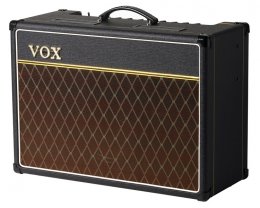
The quintessential pint-sized guitar amp that many guitarists will probably think about first in this family is the classic, an early on specialty of The Beatles. It may deliver everything from Vox’s unmistakable trademark “chime” to a unique saturation or gritty crunch.
On opposing end for the range, there’s the, the primary amp utilized on Nirvana’s Nevermind. It’s an almost over-designed tube amp with a dense and assertive clean noise, a graphic EQ, together with power to deliver edgy shades and blistering saturation in an equally convincing method. Currently, a style of amp occupies this niche in Boogie’s line: The adjustable-watt “Express.”
Small classic amps from Gibson Epiphone have relied regarding pipe besides, and after this, solid and affordable EL-84 amps are nevertheless becoming churned out by lower-cost companies from Crate to Peavey. Each of them have actually their particular dedicated fans. But the one that takes the top of this number is a relative beginner and an easy specialty in studio world: The, which can be effortlessly extremely affordable – and coolest-sounding – studio tube amps that business has ever made.
There’s not much toward professional Jr. only a few pipes, a 10” presenter, as well as 2 controls: amount and tone. But this amp is slightly devil, proven to blow the hair right back. At low levels it gives a full-bodied-yet-articulate clean tone; turned up loud, it screams with unforeseen expert.
The Jr. doesn’t do extreme overdrive on its own (you’d need to push the front end from it with a pedal to have that) although tone it will give is constantly satisfying. Arrive at think about it, there’s many things the Pro Jr. does not do: reverb, tremolo, EQ. But that does not apparently hold this amp right back. A lot of engineers I know tend to be astonished just by how often it’ll win a shootout against larger amps. I’m one of them.
A slightly larger variation, the Blues Jr., packs a bit more wattage, a larger 12” speaker that softens a few of the Pro Jr.’s bite, and a few additional settings that allow for a decent reverb and a little more preamp gain at low volume amounts. But truth be told, prevailing guitar-amp-snob viewpoint decides the ultra-compact professional Jr. while the champion. If you'd like a little, inexpensive, great-sounding foundation for a studio amp collection, this might be simply the thing.
6V6 Type
Trademark Versions: The Fender Princeton, Fender Deluxe and Fender Champ
The EL-84 was possibly the preferred choice for small guitar amplifiers in Britain throughout the early days of electric guitar. But in the shows, that honor decided to go to the 6V6, which driven a few of the best-selling and most-coveted little Fenders ever.
The 6V6 is at one's heart of the and – small powerhouses that just want to be pushed difficult. Each model has actually a bit of a unique tone, from the throaty roar of a classic tweed champ on constantly endearing and very nearly brittle smack of a silverface Vibro.
Share this article
Related Posts

Latest Posts


