

Spectrum Electric Guitars
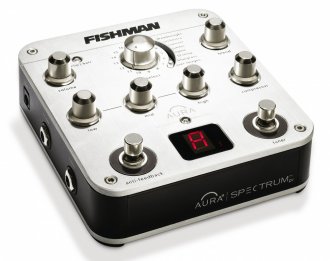 how will you make a piezo‑miked classical guitar seem like a 'real' miked acoustic? Fishman have improved to their currently impressive reply to that question...
Fishman's initial Aura system was developed to enhance the noise of acoustic guitars fitted with piezo‑electric pickups, and has now a great deal in keeping with the 'fingerprint' equaliser plug‑ins utilized in the studio. The idea usually if you assess the regularity spectral range of the original instrument both via its pickup and miked up, it must be possible to compute a complex EQ bend because of these 'images' to make the DI'd instrument noise as it would if miked. This might be just one of the technologies that may be taken to keep on problem, however, because it's possible to help refine the process by manipulating the stage as well as the quantity envelope of various elements of the frequency spectrum. Fishman, needless to say, never expose exactly which practices they use, although results have often already been very good.
The Aura Spectrum integrates a DI package with Fishman's Aura Acoustic Imaging technology and makes use of 24‑bit sound converters with 32‑bit handling. Energy can be attracted from a 9V DC additional power-supply or an interior 9V battery — and an alkaline electric battery is expected to endure over 20 hours. The device was created to make use of both under-saddle piezo and soundhole magnetized pickups, and has now prospective applications both live and in the studio.
These devices includes a three‑band equaliser, a chromatic electric guitar tuner, a straightforward 'more or less' compressor, plus automated comments suppression, which will be based on three tracking notch‑filters and a stage switch. Additional settings allow adjustment on the combination involving the natural pickup sound while the processed sound, and contacts consist of an effects loop for patching in extra processors or results. The DI output is via a well-balanced XLR connector, and there is a ground‑lift change to fight ground‑loop hum. It's also possible to process a line‑level sign, therefore tools formerly recorded with a pickup are re‑processed using the Aura Spectrum DI — a good feature.
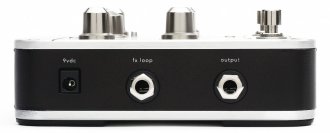 All of I/O is presented on the side and end panels of this Aura Spectrum.
That is all main-stream enough, but, just like other Fishman Aura items, why is the Aura Spectrum quite special may be the method by which it utilizes the acoustic photographs, and also the quantity of pictures available. The device includes 128 pre‑loaded photos, and amongst they're many popular acoustic stringed devices (not just guitars). Associated with 128, 16 tend to be user-configurable, via a USB link and the bundled Image Gallery III computer software.
The software (and USB link) works together both Computer and Apple Mac computers. Once I began this review, only the house windows form of Gallery ended up being readily available, so when the very first Mac version came on the web, it ended up to own difficulty with a few Macs — including mine! But the most recent variation (3.2.3) appears perfectly stable.
The Aura Image Gallery includes a large collection of photos of instruments with different miking arrangements. Currently, there are over 700 pictures of guitars (including 12‑string designs), plus a variety of various other stringed devices that would be used in combination with pickups — particularly mandolin, violin, resonator guitar, bouzouki and ukulele. It's also possible to possess Fishman make a custom Image of your personal electric guitar at added cost, after which time it is included with the library.
 Rather than detailing all instruments only by manufacturer's title and design quantity, they're also categorized by human anatomy design, the woods made use of and the make and position of microphone. Usefully, if a graphic actually present when it comes to instrument used, the ball player may use an 'Image Wizard' to find the one thatis the closest match to it, by entering details such as for instance body design, wood kind, etc.
Packed as a high‑class, all‑metal stomp box, the Aura Spectrum has actually two footswitches towards forward advantage for selecting the tuner and anti‑feedback services. Setting up the comments notches involves pushing and keeping the switch before the number '1' programs within the small display window that is positioned between your switches.
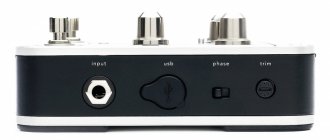
As you raise the amp gain to motivate comments, 1st filter hair on, and filter two shows up when you look at the screen. When arriving the gain sets off another comments frequency, this, also, is notched out — and likewise for notch number 3. Often, inverting the polarity associated with the sign helps to minimise the risk of feedback, and a tiny switch for this purpose can be seen on right‑hand edge of the scenario. Additionally on the right‑hand advantage tend to be an increase trim cooking pot, the primary feedback jack plug and a USB port covered by a rubber bung. Making use of the left footswitch generally activates or bypasses the comments suppressor.
The display is an extremely easy numeric one, and though it can clearly involve some cost implications, I'd have a great deal preferred to see an alpha‑numeric display — one that had been capable of showing the entire name of guitar Image currently running on the pedal. Equivalent display can be used when it comes to tuner, for which a small line of LEDs at the end regarding the screen acts as sharp, flat or 'just right' signs, as the note is shown in the main part of the display. The sound production is muted when tuning, though there's a setup mode that allows one to change this if you like the result to remain active while tuning. A level LED regarding front panel lights if the feedback level is defined way too high, and this doubles up as a battery caution indicator. Furthermore possible to bypass the entire product by pressing both footswitches as well.
Above the switches are the three EQ knobs — every one of that is centre-detented — and also the solitary compressor-adjust knob. Eventually, you will find amount (which affects both jack and XLR outputs) and Blend knobs on the top line, utilizing the Image selector at the heart. This area includes an eight‑position lever switch to the proper of 16‑position Image knob, the lever switch picking a bank containing the required instrument kind (position eight is for user‑loaded pictures, and includes a default ready already in place) while the rotary switch selects from 16 variants on the selected theme.
You don't need to pick the picture associated with your very own electric guitar for musical results, but to realize reasonable reliability you need to essentially select the correct tool kind (Jumbo, Dreadnought an such like) then attempt the 16 variants to find which noises nearest. Naturally, should you choose stumble across a great noise by selecting a graphic of a five‑string ukulele to go with your pre‑war Gibson archtop, there is nothing to avoid you against utilizing it!
Share this article
Related Posts


Latest Posts


