

Electric Guitar Strings change
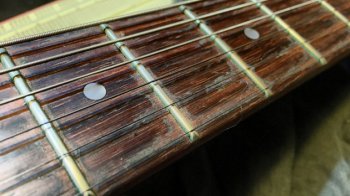 If the strings are way too crusty to play, you can always boil all of them and then make a hearty soup.
Hey, remember that electric guitar mag article on preparing for studio work? The one that said you should always transform strings before recording because you desire the brightest, loudest, many precisely intonated noise? I’ve edited terms to that impact frequently through the years.
Then there was clearly that line that said in order to avoid last-minute sequence changes no matter what, because well-worn strings supply better tuning stability, much more constant characteristics, and less finger-squeaks. Yeah, I’ve edited that article at the least as many times.
So who’s right? I’ll whip out my standard wishy-washy answer: “They both tend to be—it relies on the context.” So let’s pay attention objectively and consider those contexts.
Unless you’re cutting a solo electric guitar recording, the tone in isolation does not suggest crap.
Don’t you previously clean that thing? Let’s begin with a recording fashioned with filthy, disgusting strings. We grabbed my battered but beloved Hamer 25th Anniversary model (a Gibson-flavored axe retrofitted with Seymour Duncan’s Joe Bonamassa PAF pickups). Nowadays we perform flatwounds virtually exclusively, but I string this electric guitar with roundwounds having a “normal” research for equipment reviews. It had used exactly the same group of U.S.-made, all-nickel strings (gauged .011-.052) for something like 1 . 5 years. I'dn’t cleansed the fretboard in many years, plus it ended up being dense with muck. You might have planted a crop of potatoes amongst the 3rd and 4th frets.
However, the strings performedn’t intonate also awfully, and so I plugged in and improvised a short expression, recording direct then reamping through a small combo with a hint of springtime reverb, however with no extra EQ or compression in my DAW (Ex. 1).
Somewhat plonky-sounding, possibly, nonetheless it’s perhaps not that dreadful, is-it?
Next we snipped off the ancient strings, offered the fretboard a desperately required scrub, and setup a brand new pair of exactly the same string type. I played and stretched strings for five full minutes or so, and then duplicated the overall performance at identical recording configurations (Ex. 2).
As expected, there’s a bit more shimmer. And curiously, it sometimes is like the low-mids have now been scooped relative to Ex. 1, though we believe that’s a psychoacoustic effect regarding the revitalized highs.
But how meaningful is this difference between timbre? Might you duplicate the brighter treble via EQ? take a look at Ex. 3, that is merely Ex. 1 once more, however with some a DAW EQ bump around 2 kHz.
The EQ does not precisely make the old strings sound new, but to my ears, the modified old-string video now seems nearer to Ex. 2 than to its initial pre-EQed tone.
Which seems most readily useful? Stop—don’t response that concern! It’s a trick! Because unless you’re making a solo guitar recording, the tone in separation does not suggest crap. Let’s look at the tonal variations in the context of a band arrangement, using typical combine results. Ex. 4 features the old strings. Ex. 5 features this new people.
And in Ex. 6 the old strings tend to be EQed to seem newer.
Um, not extremely remarkable, is it? It’s a note that high quality and strength of a performance is around 937 times much more important than these types of refined tone variants.
Making soup. Since we've a doubled part played on earliest pens and incredibly news strings, what sort of sonic mischief can we get into?
In Ex. 07 you notice both guitars panned in center for an “organic flange” impact. The paths tend to be panned far kept and right in Ex. 08 for a dramatic stereo spread.
Finally, Ex. 09 is a complex mesh: Both songs tend to be routed through filters, however the left-panned track’s filter is panned right, and vice-versa.
Change for much better? I guess my response to the “should We change strings?” conundrum is, “Eh, whatever.” My advice is opt for whatever is most likely to encourage your absolute best performance. Maybe worn-in cables make you feel cool and confident, like some old-school Stax session cat havingn’t swapped strings since 1962. Or even setting up a fresh set is an upbeat preparation ritual, like sharpening your pencils and arranging your work desk before an inspired day's writing. (Though, as any writer’s-block sufferer can let you know, sharpening and arranging may become obsessive practices that achieve lieu of writing.) Musician, know thyself and string accordingly.
Share this article
Related Posts


Latest Posts


