

Electric Guitar Amplifier Reviews
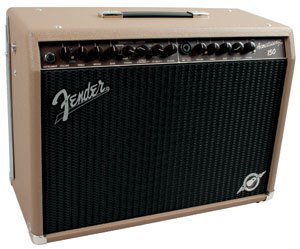 For an amp of its energy, 150 watts (2 x 75), the Acoustasonic 150 is very light, a mere 22.5 pounds. It’s also fairly small at about 16 ins high by 10 inches deep by 22 ins large. Immediately, the good looking amplifier—with its tan tolex covering and brown control board housing brown knobs with white pointers—could be recognised incorrectly as an early on sixties Fender combination. Another vintage-inspired touch is a set of metal tilt-back legs, that can be accustomed boost projection.
The layout associated with the control board is well straightforward. At remaining, there’s a 1/4-inch tool feedback, accompanied by an amount control; a feedback-elimination key; treble, center, and bass settings; and a quartet of knobs that control the amp’s Voicing, String Dynamics, and impacts kinds and amount. The setup is comparable from the right side of the panel, but it excludes the Voicing and String Dynamics settings and swaps a combined 1/4-inch/XLR jack with phantom power (+15 VDC) when it comes to 1/4-inch feedback. Additionally, just the right side has a mute key that bypasses the noise regarding the amp—perfect for tuning or altering guitars without the need to fuss with the amount degree.
On back panel is the amp’s power switch; a balanced XLR production with adjustable amount, for connecting to sound-reinforcement equipment, a must for playing in bigger venues; a stereo effects loop; and a USB port for computer connection, convenient for direct recording programs as well as whenever Fender introduces firmware revisions when it comes to amp.
Although most of these controls result in the 150 more versatile than the majority of its predecessors, the new amp eliminates a pretty convenient feature: an additional feedback RCA jack, which on previous versions might be employed for affixing a CD or MP3 player. But that is a pretty tiny issue about an amp this is certainly therefore full of various other features.
Clarity and Control
To assess the Acoustasonic 150’s sonic abilities, we plugged in a Martin DC-28E with Fishman Aura electronic devices and set the tone manages flat plus the Voicing knob to Pure Amp, thereby coloring the noise as little as possible. At reasonable amount, I became instantly hit by the 150’s existence and its particular practical, wealthy sound. It had plenty of level and clarity and also the amp had been normally resistant to feedback. Cranking the volume up unveiled an impressive amount of headroom, ample to fill a medium-size club. Predictably, the Martin did issue a little bit of howling at greater volume levels, nevertheless the suggestions Elimination switch attenuated the irksome noise as assured, together with String Dynamics knob tamed a hint of harshness in the high-end.
Not just does the 150 have a splendid basic noise, it provides a lot of soundshaping options. The Voicing control, which is a new comer to the Acoustasonic series, allows you to choose between many different modeling-based acoustic sounds—the Pure Amp that I tried very first, and Parlor, Dreadnought, and Jumbo. The second two options have four discrete notches each for further tonal variations. The Parlor and Jumbo settings performed a reasonably good job of transforming the noise for the Martin, a dreadnought, to the sound one wants from those different human body kinds. In an unaccompanied context these voicings probably wouldn’t fool a discriminating listener, but they would-be perfect for a performing acoustic guitarist who would like to stay away from bringing a battery of instruments to a band gig.
The Voicing knob can also transform the 150 into a modeling electric amplifier with Blackface, Tweed, and British options, patterned after classic Fender and Marshall amp sounds. To test these selections, I plugged in a Gibson ES-335. As the 150 wouldn’t replace a prized old valve amp, the noises were good. The Blackface offers a sweet, clean sound reminiscent of a mid-1960s Fender combo, while in the various other end of the spectrum, the British delivers a warm performing distortion typical of a cranked Marshall stack—tones ideal for an acoustic guitarist who doubles on electric but doesn’t want to have to schlep two split rigs to a gig. As a bonus, the acoustic voicings provided the ES-335 an even more subdued and woodier sound. A small downside: these options aren't footswitchable, if you’ve got acoustic and electric guitars at the gig, you’ll should transform amp configurations by hand.
The 150’s high-quality electronic impacts feature vibrato, chorus, reverb, and delay, alone and paired in various combinations. All sound pleasingly lush for both acoustic and guitar. The Reverb + Chorus 1 lent an excellent shimmer to some fingerpicked arpeggios we played in the Martin whilst Vibratone 1 (slow) environment added a gentle warble to some chordal riffing regarding Gibson. The actual only real possible drawback to your effects is that you can just adjust the amount. A new player could, as an example, replace the intensity of this delay but can’t set the result to adapt to a song’s tempo. This wouldn’t be an issue for players looking to subtly shape their particular sounds with effects; for guitarists requiring better adjustability, the results cycle makes it easy to incorporate devoted additional products.
Advanced Tone-Shaper
The Acoustasonic 150 takes Fender’s acoustic amp series to interesting brand new locations featuring its extensive collection of sonic tools. People who just want to make their particular guitars louder will value the amp’s sturdy standard sound, while people that have much more advanced amplification requirements will take pleasure in the new features, particularly the Voicing effect, which makes it feasible to both simulate the noises of the most extremely typical acoustic body kinds and double on electric guitar making use of good sonic replications of classic tube-powered amplifiers. In other words, the Acoustasonic 150 advises itself to acoustic-electric people of all of the stripes.
SPECS: 150 watts (2 x 75). Split tool (1/4-inch input) and mic (1/4-inch/XLR blended input) networks with separate treble, mid, and bass settings and results parts, including reverb, wait, chorus, and vibrato. Two 8-inch woofers with cloth surround. One high-frequency tweeter. Suggestions reduction control; String Dynamics control for soothing strident treble records; Voicing control for simulating parlor, dreadnought, or jumbo steel-string; Blackface, Tweed, and Uk amp designs for electric guitarists (all on instrument station). XLR line-out with degree control and surface raise. 15 volts phantom power on mic channel. Stereo impacts loop. USB connector. Five-ply hardwood cabinet with plastic addressing and tilt-back feet. Recommended two-button effects control footswitch. 22.5 weight. Produced in Indonesia.
Share this article
Related Posts

Latest Posts


