

Electric Guitar with Acoustic sound
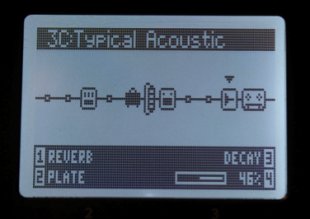 Sep 21, 2013
Published by seanhalley
Basically could point to one topic that We seem to get asked about the essential, relative to the video clip content that I alllow for Line 6, it can need to be the main topic of “how to obtain the most readily useful classical guitar noise from a James Tyler Variax.” Personal messages, email messages and YouTube responses on particular movies I’ve done apparently hold this completely as a location of great interest for some folks, thus I figured it may be time for you dish out a few of personal ideas on the matter.
The first variable to think about when playing any real classical guitar may be the measure of this strings. If you hear an electric powered guitar strung with 008’s, and then listen to similar electric guitar strung with 011’s, it may not also sound like the same instrument. As soon as the electric guitar is strung with 011’s, it should do have more energy and result than it can with smaller strings…not only that, the strings will also wiggle around less when you look at the seat, since there is more tension to keep them in position whenever strung at pitch. You may possibly actually have less of various other desirable sequence features though—that great rubbery/glossy thing that strings can do if they are actually slack, for instance—but in general your guitar will sound a tad bigger with larger strings, to a point.
So it will make sense your exact same logic would apply on a classical guitar, therefore does. Greater the string, the greater tension this has together with more stable it really is when you look at the saddle, which greater stress drives the wood top more—giving a more substantial sound.
Another variable to keep in mind is acoustic strings tend to be nearly always bronze or metal, which seem different from nickel electric strings.
Keep in mind that we're maybe not causing samples or any such thing with all the James Tyler Variax. We’re coping with resonances and decay, based upon the feedback signal for the piezo pickup when you look at the bridge associated with guitar. As such, the strings’ dimensions, steel content and age do matter.
Therefore for acoustic sounds specifically, it may possibly be helpful to consider playing a James Tyler Variax strung with 010’s like you’re playing a Martin® HD-28® acoustic guitar strung with 008’s. If you were to play a large dreadnaught acoustic strung with truly small strings, it could simply take some adjustment: you cann’t play it too hard, considering that the strings will be therefore small that they would come to an end of stress a long time before they ever before started to “drive” the wood top of the electric guitar.
This leads us to Factoids # 1 and number 2: I string all my JTV guitars with 011 strings, and I consider playing the acoustic sounds like I’m playing a dreadnaught acoustic guitar strung with 008’s, therefore we perform all of them GENTLY. And I mean REALLY gently.
Become honest, that is where a lot of the fight permanently JTV acoustic sounds is. Whenever I play standard electric noises I overcome the snazzle from the electric guitar sometimes, but when we have fun with the acoustic stuff I treat the tool in a completely various way.
The next step is reading it, hence requires a playback system.
The fact is that acoustic guitars sound rather bad for me when they’re coming through electric guitar amps. You can try and minimize the preamp gain that an electric amp has, and you may roll down a number of the large frequencies to try and stop the noise from eliminating the enamel from your own teeth, but the the truth is that acoustic guitar playback methods must be full range and 100per cent clean, 99.6percent of that time.
Share this article
Related Posts


Latest Posts


